
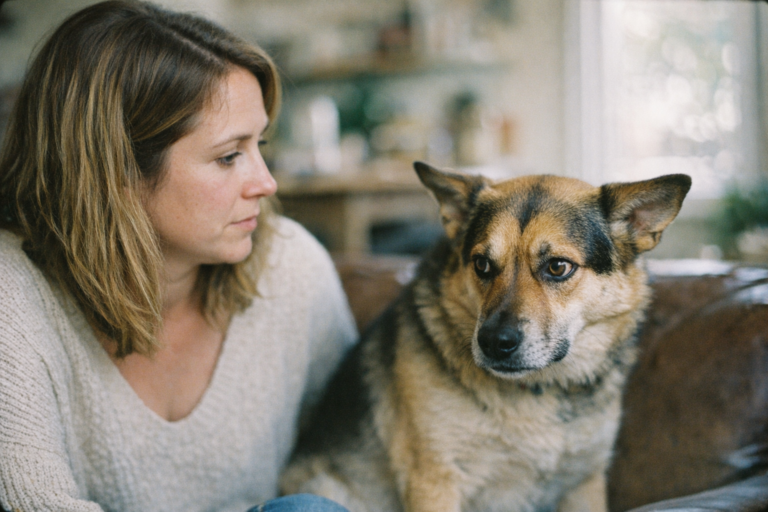
Understanding Reactive Dog Body Language: Early Warning Signs Every Owner Should Know
- •Reactivity almost always starts with subtle body language signals — not the lunge or the bark.
- •Learning to read your dog's early warning signs gives you a window to intervene before things escalate.
- •The stress ladder is real: every missed signal moves your dog one step closer to a full reaction.
- •Your own body language plays a direct role in how quickly your dog escalates — or settles.
- •Catching signals early makes training faster, walks more peaceful, and your bond significantly stronger.
If your dog has ever exploded into barking, lunging, or snapping and left you completely blindsided, you’re not alone — and you’re not failing as an owner. The truth is, your dog almost certainly did warn you. You just didn’t know what to look for yet. This post will change that.
What Does 'Reactive' Actually Mean in Dog Behaviour?
Reactivity isn't bad behaviour — it's a communication problem waiting to be solved.
A reactive dog is one that responds to certain triggers — other dogs, strangers, traffic, bikes — with behaviour that looks dramatically out of proportion. Barking, lunging, spinning, or freezing are all common. But here’s the key thing: reactivity is a symptom, not a personality trait.
Most reactive dogs are either fearful, frustrated, or overstimulated — sometimes all three at once. A dog who lunges at other dogs on leash might actually be desperate to greet them, not fight them. Understanding why your dog reacts changes everything about how you respond.
For a broader foundation on how dogs communicate through their whole body, the complete guide to reading your dog’s body language and calming signals for Perth dog owners is a brilliant starting point before diving deeper here.
What Does the Stress Ladder Look Like in a Reactive Dog?
Every reaction has a build-up — and every rung of the ladder is a chance to step in.
Think of your dog’s arousal like a ladder. At the bottom: calm and relaxed. At the top: full-blown reactive outburst. Most owners only notice their dog when they’re near the top — but the climb starts much, much earlier. Your job is to spot the lower rungs.
The lower rungs typically look like soft, easy-to-miss signals: a slight stiffening of the body, a lip lick, ears rotating forward, or a weight shift onto the front legs. These aren’t dramatic — that’s exactly why they get missed. If you’d like to go deeper on these, the article on whale eye, lip licks, and yawns breaks down each subtle stress signal in detail.
Once a dog reaches the upper rungs of the stress ladder — hackles fully raised, hard stare locked on trigger — rational learning stops. You can’t train a dog who is over threshold. Your priority at that point is distance and de-escalation, not commands.
What Are the Earliest Physical Signs That a Dog Is About to React?
These signals appear seconds before a reaction — and most owners miss every single one.
The first physical warning signs are almost always in the eyes, ears, and posture. Look for a sudden stillness — your dog stops sniffing, stops moving, and locks their gaze. This hard stare with a freeze is one of the clearest early indicators that your dog has clocked something and is deciding what to do about it.
Ears shifting forward or erecting (depending on breed), tail going stiff and high, and weight transferring onto the front legs are all happening in the same two-to-three-second window. If you spot even one of these, that’s your cue to act — increase distance, change direction, or use a calm interrupter.
- •Hard stare: eyes lock onto the trigger, blinking stops, expression goes flat
- •Body freeze: mid-step stillness, like someone pressed pause on your dog
- •Forward weight shift: front legs take more weight, chest lowers slightly
- •Tail stiffening: tail goes rigid — high and stiff in arousal, tucked in fear
- •Ears forward or pinned: depending on breed and emotional state
- •Closed mouth: if your dog was panting and suddenly closes their mouth, pay attention
- •Hackles raising: can appear just at the shoulders or run the full length of the back
How Do You Tell the Difference Between Fear-Based and Frustration-Based Reactivity?
The outburst can look identical — but the emotional driver determines your entire training approach.
Fear-based reactivity typically involves a dog who wants distance. Look for a low, tucked body posture, ears pinned back, a tail low or tucked, and a dog who tries to move away before the reaction kicks in. The bark is often high-pitched and frantic, and the dog may take any out you offer — turning away, going behind you, or retreating.
Frustration-based reactivity looks completely different at the lower rungs. This dog is usually forward-focused — straining at the leash, whining, spinning, making high-pitched sounds before the trigger even arrives. The body is forward and tense, tail is often high and fast-wagging. This dog wants to get to the trigger, not away from it.
Why does this matter? Because the training solution is different for each. Flooding a fear-reactive dog by moving closer will make things dramatically worse. And simply redirecting a frustrated dog without addressing their leash manners and impulse control won’t stick long-term.
Film your dog on walks using your phone in your pocket or a chest mount. Watching footage back at normal speed — and especially in slow motion — will reveal early signals you’re completely missing in real time. Most owners are genuinely shocked by what they see.
What Does the 'Trigger Stacking' Effect Look Like on a Walk?
One trigger your dog handles fine. Three in a row? That's a very different story.
Trigger stacking is what happens when your dog encounters multiple stressors in a short window before their stress hormones have had time to drop back to baseline. A bin truck passes — manageable. Then a dog barks from behind a fence — still okay. Then a jogger comes around the corner — and suddenly your dog absolutely loses it at what seems like nothing.
The jogger wasn’t the problem. The stack was the problem. Each trigger added to a rising baseline that never got a chance to settle. This is why a dog who was fine at the start of the walk completely falls apart twenty minutes in — especially on high-stimulation routes like dog parks, busy streets, or school zones.
Recognising trigger stacking means you can actively manage your walk route and pacing to keep your dog under threshold. Shorter loops, quieter times of day, and sniff breaks that let your dog’s nervous system reset are all practical tools — not workarounds.
How Does Your Own Body Language Affect Your Dog's Reactivity?
Your tension travels straight down the lead — and your dog reads every bit of it.
The moment you spot a trigger ahead, your body changes: grip tightens, breathing shortens, posture stiffens. Your dog feels all of that before they’ve even registered what you’ve seen. You’ve just told them — non-verbally — that something worth worrying about is coming. And they’ll respond accordingly.
Learning to consciously soften your body when a trigger appears is one of the most powerful and underrated skills in reactive dog handling. Exhale slowly, loosen your grip, keep your shoulders down, and change direction with a relaxed, casual energy rather than a tense yank. Your dog is watching you for information.
If you want to go further with this, the article on how to use calming signals in your own body language to communicate better with your dog explores exactly how to do this step by step — it’s genuinely one of the most practical reads for reactive dog owners.
What Should You Actually Do When You Spot an Early Warning Sign?
Spotting the signal is half the work — here's what to do in the three seconds that follow.
The golden rule: increase distance before your dog escalates, not after. The moment you see a freeze, a hard stare, or a mouth snap shut — move. Turn, curve away, step behind a parked car, or duck into a side street. You’re not retreating. You’re buying your dog space to think.
- •Step 1: Spot the early signal — freeze, stare, mouth closing, weight shift forward
- •Step 2: Increase distance immediately — turn, curve away, or step behind cover
- •Step 3: Soften your own body — breathe out, loosen your grip, drop your shoulders
- •Step 4: Use a calm, upbeat interrupter to redirect attention back to you (not a tense command)
- •Step 5: Reward any offered eye contact or disengagement from the trigger generously
- •Step 6: Note what happened — trigger type, distance, time of day — to spot patterns
If you’re regularly in environments where these situations are unavoidable — dog parks, off-leash areas, busy Perth suburbs — the article on dog body language in the park is essential reading for spotting trouble from a distance before it ever reaches your dog.
Your Questions About Reactive Dog Body Language, Answered
Straight answers to the questions Perth dog owners ask most about reactivity.
Is My Dog Being Aggressive or Just Reactive — and Does the Difference Matter?
Reactivity and aggression can look similar but have very different emotional roots and risk profiles. Most reactive dogs are over-threshold due to fear or frustration — not intent to cause harm. That said, reactivity that involves repeated escalation, contact, or bites does need professional assessment. If you’re unsure, a behaviour consultation is always worth doing early rather than late.
At What Age Do Dogs Typically Start Showing Reactive Behaviour?
Reactivity often surfaces between 6 and 18 months — as adolescence hits and early socialisation windows close. However, it can develop at any age following a traumatic experience, illness, or significant change in environment. Dogs adopted as adults sometimes show reactivity that emerges weeks or months after settling in, as they become more confident expressing themselves.
Can a Reactive Dog Ever Become Fully Comfortable Around Their Triggers?
Many reactive dogs make remarkable, life-changing progress with the right approach — and some reach a point where their triggers genuinely don’t phase them. Others manage beautifully with consistent handling strategies and a realistic understanding of their limits. The goal isn’t a perfect dog — it’s a dog who can navigate their world without distress, and an owner who knows how to support them.
Should I Be Correcting My Dog When They React, or Ignoring the Outburst?
Correcting a dog who is already over threshold adds stress on top of stress and almost always makes reactivity worse over time — especially in fear-based cases. Ignoring the outburst entirely isn’t the answer either. The most effective approach is to prevent the outburst by reading early signals and managing distance, then building new emotional associations with triggers through structured training.
Ready to Finally Get Ahead of Your Dog's Reactions?
Agile Dogs runs specialist reactive dog classes in Perth designed to give you the exact skills to read your dog earlier, respond smarter, and make every walk less stressful. Call 0448 153 316 or hit the button below to enquire today.
Part of our guide: How to Read Your Dog's Body Language and Calming Signals: The Complete Guide for Perth Dog Owners